|
...SIŁA I PIĘKNO MUZYKI TKWIĄ W JEJ RÓŻNORODNOŚCI...
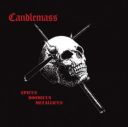
Debiut Szwedów z Candlemass jest dziś albumem absolutnie kultowym. Zawarta na nim muzyka mocno inspirowana dokonaniami Black Sabbath, na zawsze wpisała się w kanony muzyki metalowej oraz bardzo mocno przyczyniła do powstania gatunku jakim jest Doom Metal. "Epicus Doomicus Metallicus" wydany został w czerwcu 1986 roku przez Black Dragon Records. Na krążku znalazło się 6 numerów o łącznym czasie trwania 43 minut. Głównym kompozytorem jest basista Leif Edling, który napisał muzykę i teksty. To z tej płyty pochodzą takie klasyki jak "Solitude", "Under The Oak", czy "Sorcerer's Pledge".
Na albumie słuchacz spotyka się głównie z wolnymi tempami, jednak nierzadko zdarzają się przyspieszenia. Znajdziemy je np w "Black Stone Wielder" czy wymienionym wcześniej "Sorcerer's Pledge", któremu należy poświecić więcej uwagi. Ten ponad ośmiominutowy kolos zamykający płytę zaczyna się od dźwięków gitary akustycznej i delikatnego śpiewu wokalisty Johana Langquista. Pierwsza część wprowadza słuchacza w nastrój niepokoju i grozy. Później przetaczają się riffy ciężkie jak ołów, oraz liczne zmiany tempa, bo jest to najbardziej rozbudowany numer na tym albumie. Kończy go świetna chóralna partia zaśpiewana przez Cille Svenson, która dodaje epickiego rozmachu i idealnie pasuje do klimatu numeru. Najdłuższy numer na "Epicus" kryje się pod dwójką, czyli "Demons Gate" jest to kolejny bardzo rozbudowany fragment. Trwa on ponad 9 minut, jednak trzyma on cały czas słuchacza w napięciu i nie pozwala odpocząć nawet na sekundę.
Wszystkie numery zawarte na debiucie Candlemass pokazują jakim genialnym kompozytorem był i jest Leif Edling. Nie jestem w stanie sobie wyobrazić jak jest to możliwe żeby jeden człowiek napisał tyle genialnej muzyki. Ten facet miał olbrzymie umiejętności jeśli chodzi o pisanie epickich doom metalowych numerów, wystarczy posłuchać początku do otwierającego całość "Solitude" czy też dowolnego numeru z późniejszych płyt Szwedów aby się o tym przekonać. Ogólnie rzecz biorąc "Epicus" to pozycja obowiązkowa dla każdego fana klasycznego Metalu. To tutaj narodził się unikalny styl zespołu kontynuowany na następnych albumach.
Jeżeli ktoś nie zapoznał się z tym materiałem, polecam zmienić to jak najszybciej. Każdy z zawartych tutaj numerów to absolutny klasyk, nie ma tutaj miejsca na żadne wypełniacze. Mimo iż wyżej od OPISywanej tutaj płyty stawiam "Nightfall" to pierwsza płyta Szwedów jest również w ścisłej czołówce ich najlepszych albumów.
Morbid Golem
There’s no award for album titles, but when one spawns an entire genre in its wake, it feels like the highest possible honor. It doesn’t happen often—see Smokey Robinson’s A Quiet Storm and Brian Eno’s Ambient 1: Music for Airports—but as heavy metal became globally popular in the 1980s and continued branching out into web-like subcategories, it happened twice in just a few years. In 1982, the British band Venom released their startlingly extreme second album, Black Metal, first inspiring a wave of speed-demon thrash bands, then even more evil-sounding bands who took the “black metal” banner and ran with it. And in 1986, some kids in Sweden who played slow, dramatic, heavy music not only coined the “epic doom metal” genre tag, but also made its ur-text. Like a power hitter pointing to the bleachers beyond centerfield while approaching the plate, Candlemass dubbed their debut Epicus Doomicus Metallicus. Peaceville Records’ new 35th anniversary reissue celebrates the album with a fresh remaster and two bonus discs of demos and rehearsal recordings.
By the mid-’80s, the new wave of British heavy metal (NWOBHM) had ripped like a wildfire around the world, distancing metal from the blues riffs of its early days and speeding up its tempos. Its many thrash progenies, such as Metallica and Slayer, further ramped up that arms race. In this landscape, Candlemass were retro fetishists from a corner of the map that hadn’t yet established itself as a metal stronghold. Avowed Black Sabbath fans, they drew up an entire blueprint from the slowest, creepiest songs in their idols’ catalog, such as “Into the Void,” “Electric Funeral,” and of course, the song that’s commonly cited as the first-ever example of doom metal, “Black Sabbath.” Candlemass strove in the complete opposite direction of their most popular contemporaries, but just like thrash bands’ giga-warped take on Iron Maiden’s galloping riffs and black metal bands’ lo-fi corruption of Venom’s vision, they made Sabbath’s sounds their own by taking them to the extreme. Fatter riffs, slower tempos, more operatic vocals, more gothic synths, nerdier lyrics—these were Candlemass’ aspirations.
The melodies on Epicus Doomicus Metallicus are dramatic and expansive without being overly complex, alternately hinting at pre-Renaissance origins and/or the most basic skeletons of classical music. Especially during acoustic passages on songs like “Under the Oak” and “A Sorcerer’s Pledge,” it’s easy to imagine the music being cribbed from a cruel medieval dynasty’s funeral rites. (On their next album, the band actually covered the most famous funeral march of all-time.) Epicus’ deceptively simple trick is that these melodies, when transposed on drop-tuned, distorted electric guitars, make the beefiest blues riff sound like a kitten’s mewl. Witness the transition on opener “Solitude” where, just as a mournful acoustic guitar line peters out, an electric fades in, playing a version of the same melody, but simplified in a brute-force way that instantly awakens the lizard brain. This is what striking gold sounds like—a simple, near-accidental discovery that, in time, made thousands believe that it was as easy as sticking a pan into a creek.
Candlemass’ early lineup shuffling suggests that it might actually be that easy. Of the six people that play on Epicus, only two, bassist Leif Edling and rhythm guitarist Mats Björkman, showed up on the following year’s Nightfall. Epicus was recorded with a singer (Johan Längquist) and a lead guitarist (Klas Bergwall) who were called in as session musicians at the eleventh hour to record material that, apart from the guitar solos, was already finely mapped out. Despite the constant churn, Candlemass were consistent, putting out four good-to-great albums between ‘86 and ‘89, and Edling was the glue that held it all together. He’s the sole songwriter on the vast majority of Candlemass’ output, and on the demos included with this Epicus reissue, he’s even doing the vocals. Especially for music that’s driven by lumbering riffs instead of tight grooves, it’s rare for a non-singing bassist to be the bandleader: Unlikely as it was, Edling became the godfather of epic doom metal.
Compared to Candlemass’ ensuing output, Epicus has a charmingly rudimentary, rough-hewn quality. It’s not astounding to imagine session players learning these parts in a matter of weeks. At the time, Längquist (who rejoined the band in 2018) wasn’t quite the lurid, vibrato-prone wailer that his more celebrated successor, Messiah Marcolin, was. But these crushing, slightly ridiculous songs require everyone to hit their marks, and as a result, Candlemass never sounded more united toward a single purpose. This renders the reissue’s demos, whose differences mostly lie in audio fidelity, less essential; it also makes the band’s more grandiose later material look even more ambitious by comparison. Compared to the self-consciously “epic” bands it would inspire, Epicus balances histrionics with an edgy brawn, instantly recognizable among the era’s more primordial heavy metal.
Bands like Pentagram, Trouble, the Obsessed, and Witchfinder General had built on the Sabbath template throughout the late ‘70s and early ‘80s, so the term “doom metal” was already in the ether by 1986. But due to a number of factors—in Pentagram’s case, forming in 1971 but not releasing their first album until 1985—it took until the mid-’80s for the the genre to evolve and spark scenes as far-flung as New Orleans and Northern England. Epicus was initially received so poorly that Candlemass were dropped from their label, Black Dragon Records, shortly after its release. Six months later, demand was so high that the album had been repressed three times. And now, you can hear its echoes in every skyward-reaching doom band.
Patrick Lyons
1. Solitude
2. Death's Gate
3. Crystal Ball
4. Black Stone Wielder
5. Under the Oak
6. A Sorcerer's Pledge
Vocals - Johan Langquist
Vocals [Additional] - Cille Svenson (tracks: 6)
Rhythm Guitar - Mats Bjoerkman
Guitar [Solo] - Klas Bergwall
Drums - Matz Ekstroem
Bass - Leif Edling
https://www.youtube.com/watch?v=XmeKS8F8eAM
'Głupi ludzie wierzą w głupie bzdury,
Mądrzy ludzie wierzą w mądre bzdury'
CHURCH IS GIVING MORE LIGHT ONLY WHEN IT'S BURNING.
SEED 14:30-23:00.
POLECAM!!!
|